
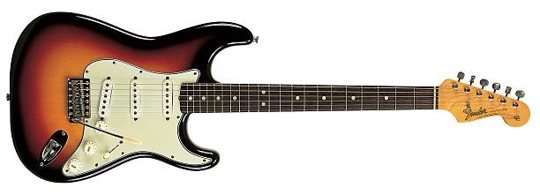
As a guitarist, this story immediately caught my attention.
In March, Germany’s Regional Court of Düsseldorf granted Fender Musical Instruments Corporation copyright protection in the European Union for the iconic Stratocaster body shape — the classic “S-style” guitar design. Introduced in 1954, the Stratocaster’s sleek mid-century modern silhouette has become one of the most recognizable instrument designs in history. When most people picture an electric guitar, chances are they’re imagining a Strat. I even own one myself.
Following the ruling, Fender escalated its efforts this May by sending cease-and-desist letters to multiple guitar manufacturers — including companies in the United States — demanding they stop producing guitars with Strat-style body shapes. The letters reportedly required companies to:
- Halt production immediately
- Destroy existing inventory
- Provide proof of destruction
- Pay damages and legal fees, among other demands
The campaign targeted both boutique builders and larger manufacturers. Among the most notable were PRS (Paul Reed Smith), maker of the popular John Mayer Silver Sky model, and family-owned LsL Instruments, which launched a GoFundMe campaign to help fight the legal challenge.
To be fair, Fender has every right — and the responsibility — to protect its intellectual property. Many guitars on the market are exact copies of the Stratocaster design.
But the backlash has been swift.
Many players and builders see the move as aggressive overreach from a large corporation targeting smaller competitors. Others argue that while Fender created the iconic platform, many modern builders have improved upon it through innovation, premium materials, and custom craftsmanship — often delivering higher-quality instruments at lower prices while still honoring the original design concept.
For smaller builders, the financial impact of legal battles, forced redesigns, or destroyed inventory could be devastating. Even larger companies like PRS face pressure despite substantial differences in details such as headstocks, contours, electronics, and inlays.
With all this one obvious question pops up:
The Stratocaster was introduced more than 70 years ago. Why try to lock down the shape now?
For many players, it feels like that horse left the barn decades ago.
Industry Backlash and the Bigger Risk
In the short term, Fender may strengthen its control over one of the most recognizable guitar designs in the world, particularly in Europe. That could create new licensing opportunities and tighter brand control.
But the larger risk may be long-term damage to brand perception.
The guitar community is culture driven. Aggressive legal action against respected boutique builders and artist-inspired models has already sparked criticism across YouTube, forums, and social media. A well know YouTube guitar influencer, Tim Pierce has even described the strategy as “brand suicide.”
That matters.
Instruments are emotional products. Brand loyalty drives pricing power, resale value, and cultural relevance. Alienating core enthusiasts could weaken the very ecosystem that helped make the Stratocaster legendary in the first place.
History shows that heavy-handed intellectual property enforcement in creative industries can sometimes backfire — especially when innovation and shared inspiration are part of the culture.
The Stratocaster remains one of the greatest guitar designs ever created. The question now is whether Fender’s legal campaign will strengthen that legacy — or isolate the brand from the community that built it.